

Posters
Our work presented at international toxicology and cosmetics congresses.
 SOT — Baltimore, 10-14 March 2019
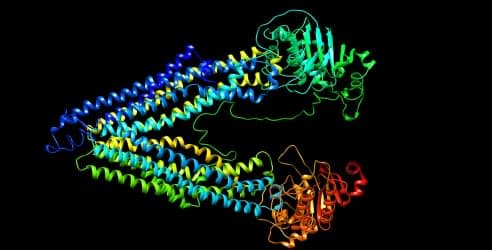
In-silico modelization of compounds interaction with Bile salt Export Pump (BSEP): an alternative approach to predict hepatotoxicity
BSEP is an efflux transporter protein present in the hepatocyte membrane that plays an important role in bile acid flow from the hepatocyte cell into the bile canaliculi. Impaired BSEP activity due to drug interaction leads to accumulation of bile acid within the hepatocyte cells and results in cholestatic liver injury (DILI). However, due to the lack of an X-ray structure of BSEP, there is no detailed information about the interaction of compounds with BSEP.
- SOT — Baltimore, 10-14 March 2019
Safety assessment of cosmetic ingredients for skin sensitization using QSAR in silico tool
Skin sensitization methods are developed to protect workers and consumers from chemical exposures. In 2012, the OECD addressed the 5 Key Events of the skin sensitization Adverse Outcome Pathway (AOP). To respond to cellular and tissue events (KE2, KE3), in vitro alternative methods were well described such as OECD TG 442C (DPRA), OECD TG 442D (KeratinoSens™) and OECD TG 442E (h-CLAT). The two biomarker-based tests SENS-IS and GARD are under consideration by the OECD for the development of the respective TGs.
 SOT — Baltimore, 10-14 March 2019
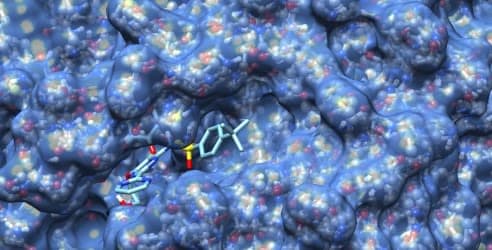
In silico prediction of structure and compound affinity of Multidrug Resistance-associated Protein 2 (MRP2) for predicting hepatotoxicity
MRP2 is a unidirectional efflux transporter mainly present in the liver, that primarily transports organic anions, including drug conjugates and conjugated bilirubin. MRP2 supports a function in the terminal excretion and detoxification of endogenous and xenobiotic organic anions. Due to the lack of an X-ray structure of MRP2, there is no detailed information about the interaction of compounds with MRP2.
- SOT — Baltimore, 10-14 March 2019
Cosmetics exposure data — particular case of children from birth
It is commonly accepted that the skin surface area over body weight ratio (SA/BW) of infants and children is higher than that of adults. Regarding the safety assessment of cosmetic ingredients, Toxicological Reference Values are expressed as mg/kg bw, and the change in the SA/BW ratio compared with an adult would give a discrepancy of 2.3-fold for children at birth. Given the ambiguity of these data, the question was raised whether the use of an increased uncertainty factor would be relevant to cover children at birth exposed to cosmetic ingredients.
Use of Silensomes™ for the analysis of the inhibitory effect of amiodarone on warfarin metabolism
Silensomes™ correspond to batches of cryopreserved pooled human liver microsomes (HLM) chemically silenced for one specific CYP450 using a mechanism-based inhibitor. It is well known that alterations of CYP-mediated drug metabolism by simultaneous administration of other drugs is one of the most common causes of drug-drug interactions. Warfarin is a widely used anticoagulant with a narrow therapeutic index, mostly metabolized by CYP2C9, and amiodarone is described to inhibit CYP2C9. The studies reported here aimed at an in vitro experimental demonstration of this prediction, using Control Silensomes™ and CYP2C9 Silensomes™.
Essential oils mixtures safety-in-use evaluation in personal care products
Safety-in-use evaluation approach for essential oil mixtures in personal care products, combining a review of toxicological data, exposure calculation and tolerance testing.